
From You to Nature: Interactive installation on everyday choices and biodiversity
From You to Nature: Interactive installation on everyday choices and biodiversity
Designing an interactive installation to encourage reflection on biodiversity and human impact at Naturalis Museum
Designing an interactive installation to encourage reflection on biodiversity and human impact at Naturalis Museum
Experience Design
•
Interactive Storytelling
TYPE:
Graduation Project
ORG.:
TU Delft x Naturalis, NL
YEAR:
2025
DURATION:
6 months
Project Snapshot
Contribution
Contribution
Solo designer and researcher, end to end: research, concept, narrative and interaction design, prototyping, and testing.
Solo designer and researcher, end to end: research, concept, narrative and interaction design, prototyping, and testing.
Context
Context
A graduation project at TU Delft, in collaboration with Naturalis Biodiversity Center, designed for families with children aged 9 to 12 and for the museum's opening "Leven" gallery.
A graduation project at TU Delft, in collaboration with Naturalis Biodiversity Center, designed for families with children aged 9 to 12 and for the museum's opening "Leven" gallery.
Methods
Methods
Expert interviews, a children's nature class, and contextmapping with families; iterative prototyping; and usability testing with seven families. AI as a copilot throughout, for transcription, translation, visualization, and idea sparring.
Expert interviews, a children's nature class, and contextmapping with families; iterative prototyping; and usability testing with seven families. AI as a copilot throughout, for transcription, translation, visualization, and idea sparring.
Beautiful nature, half the story
Naturalis focuses on the beauty of nature and the sense of wonder it creates. It says little about the biodiversity crisis, but it wants to start telling that part of the story.
Earlier museum research had revealed a clear gap. Families with young children already knew nature was in trouble, but not what causes it or what they could do to help. They also preferred to find this story in one dedicated space, rather than spread across the museum.
Naturalis chose the "Leven" gallery for this. It is the first gallery visitors see, so it sets the tone for the rest of the museum. The museum asked me to build on this work and create a new interactive experience there. My brief was to make biodiversity relatable and engaging for families with children aged 9 to 12, and help them understand it and feel able to act.
Naturalis focuses on the beauty of nature and the sense of wonder it creates. It says little about the biodiversity crisis, but it wants to start telling that part of the story.
Earlier museum research had revealed a clear gap. Families with young children already knew nature was in trouble, but not what causes it or what they could do to help. They also preferred to find this story in one dedicated space, rather than spread across the museum.
Naturalis chose the "Leven" gallery for this. It is the first gallery visitors see, so it sets the tone for the rest of the museum. The museum asked me to build on this work and create a new interactive experience there. My brief was to make biodiversity relatable and engaging for families with children aged 9 to 12, and help them understand it and feel able to act.
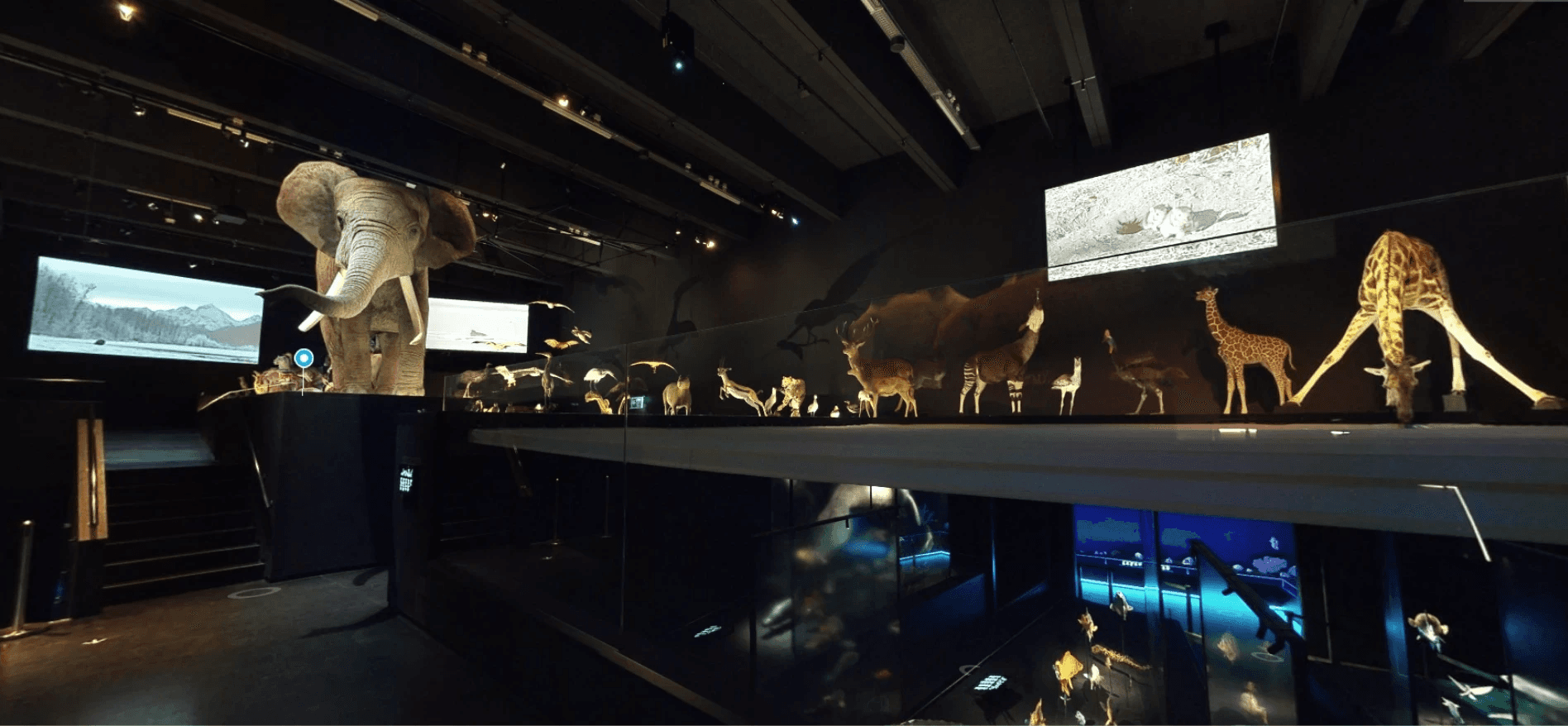
Leven Exhibition at Naturalis Museum, Leiden, The Netherlands
Listening before designing
Before I designed anything, I did my own fieldwork to build on the museum's findings.
I interviewed Naturalis experts: a content developer, a pollinator scientist, and the education team. I observed a children's nature class to see how children this age learn best, which is by touching, moving, playing, and doing, rather than being told. And I ran contextmapping with families, using booklets they filled in beforehand so children could show me their world through drawings and stories.
Two things came out of it. A co-creation session with Naturalis staff surfaced a theme, not the concrete content I had expected, but something more useful: interconnectedness, that in nature, losing one part affects the rest. And the contextmapping showed me how to reach children: they connect with nature through small, local, everyday things, not big, abstract ones. Whatever I built had to be relatable to their daily lives.
To learn how to tell that kind of story, I then studied how other museums use interactive exhibits to get a message across.
Before I designed anything, I did my own fieldwork to build on the museum's findings.
I interviewed Naturalis experts: a content developer, a pollinator scientist, and the education team. I observed a children's nature class to see how children this age learn best, which is by touching, moving, playing, and doing, rather than being told. And I ran contextmapping with families, using booklets they filled in beforehand so children could show me their world through drawings and stories.
Two things came out of it. A co-creation session with Naturalis staff surfaced a theme, not the concrete content I had expected, but something more useful: interconnectedness, that in nature, losing one part affects the rest. And the contextmapping showed me how to reach children: they connect with nature through small, local, everyday things, not big, abstract ones. Whatever I built had to be relatable to their daily lives.
To learn how to tell that kind of story, I then studied how other museums use interactive exhibits to get a message across.
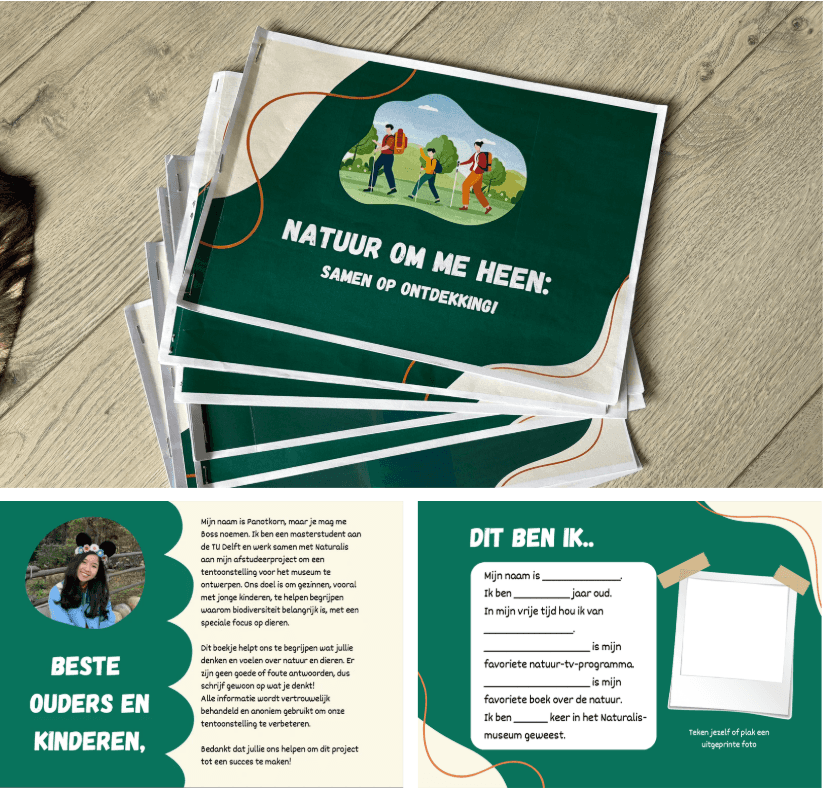
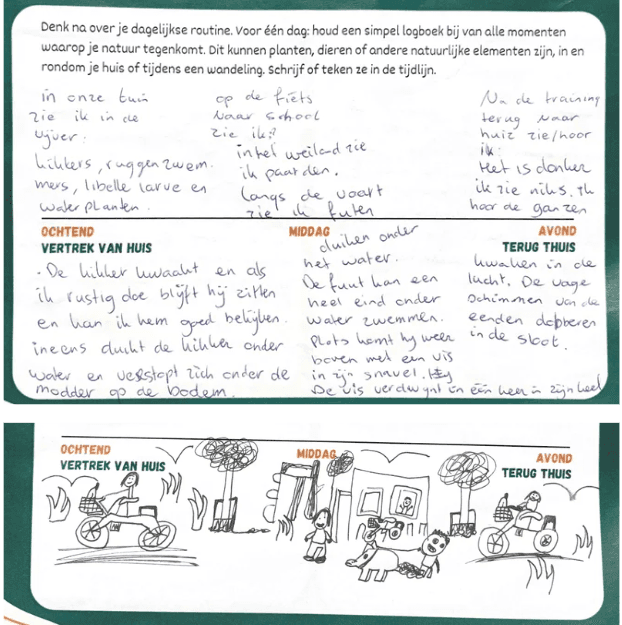
Sensitizing Booklet from Contextmapping research method
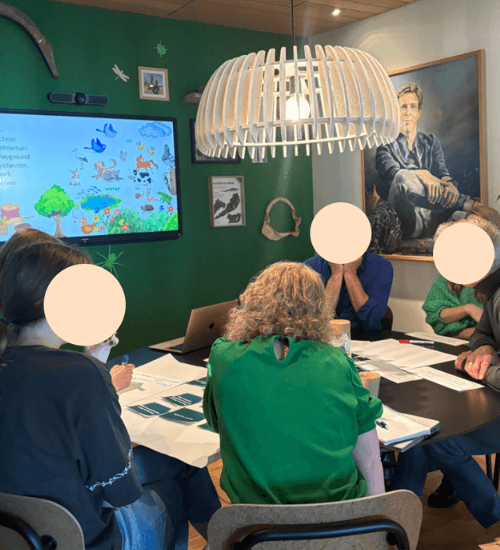
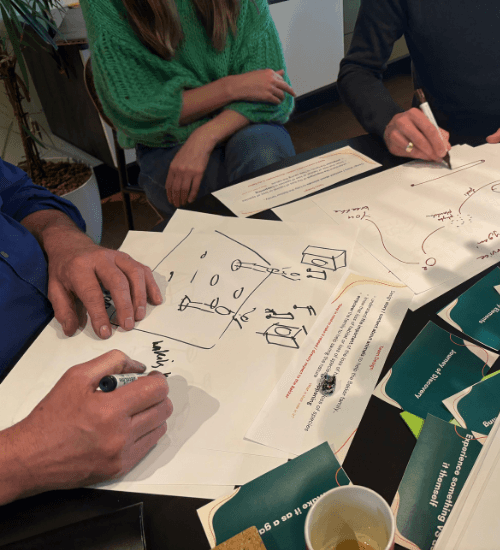
Brainstorming session at Naturalis
Designing beyond the screen
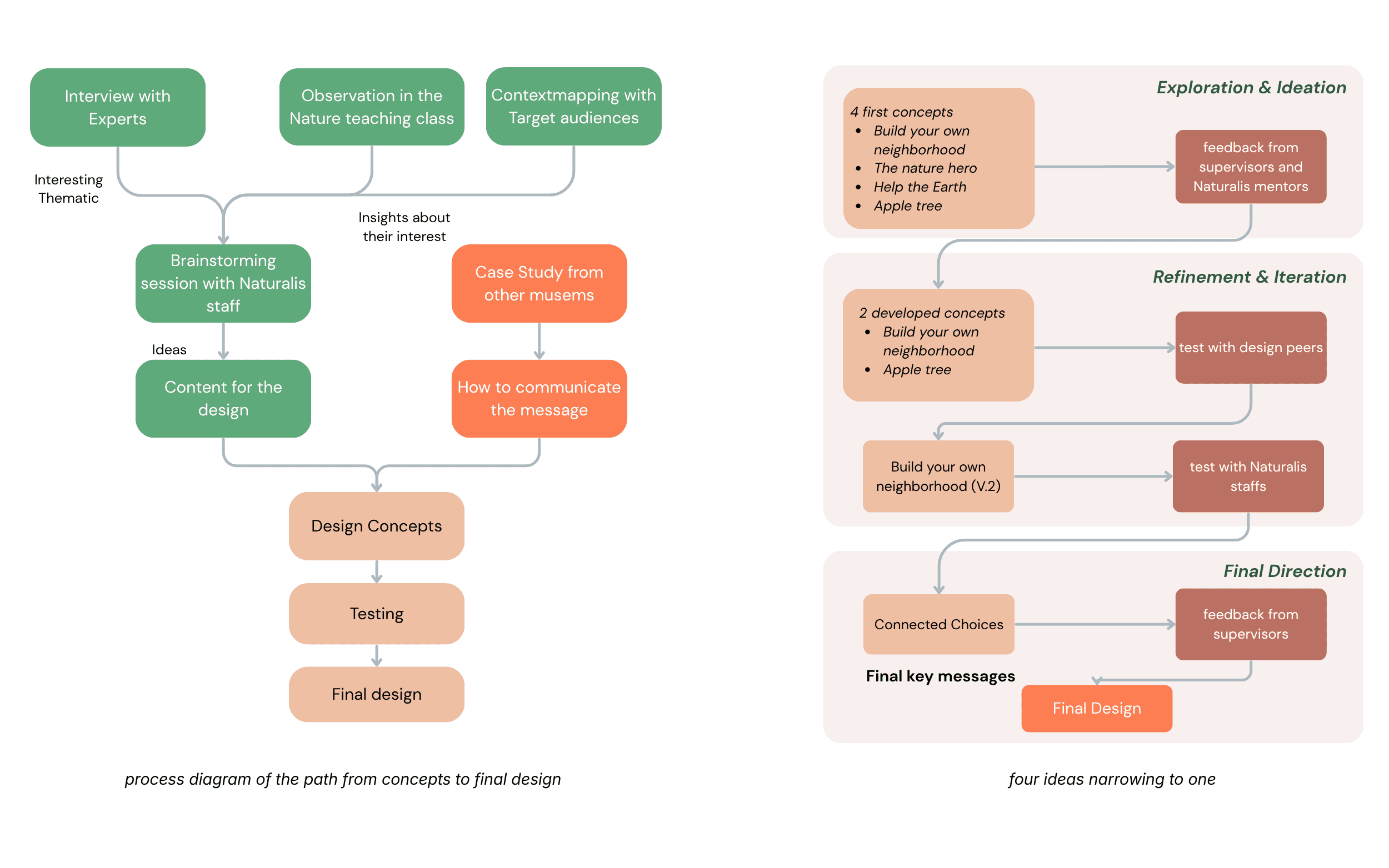
I held the experience to a few rules: it had to be relatable, as the children had shown me, and it had to spark curiosity, invite reflection, and drive action. My first concepts were broad and unfocused, four directions pulling different ways. I refined them through rounds of feedback and testing: a midterm review, sessions with design peers, and input from Naturalis staff, with AI as a sounding board. The turning point came with the message. Once it sharpened to 'every choice affects nature, because everything is connected,' the design clicked into place, and the four narrowed to one.
The final concept made that message tangible through five everyday family choices: food waste, buying too many clothes and toys, littering, feeding ducks, and leaving lights on at night. Each is small, familiar, and tied to animals children already care about.
This was the des
ign decision I am most proud of. The message is about connection, so the experience had to connect people too. I built it as a physical model the family gathers around, not a screen each person taps alone, and I let them make the choices instead of telling them what to do.
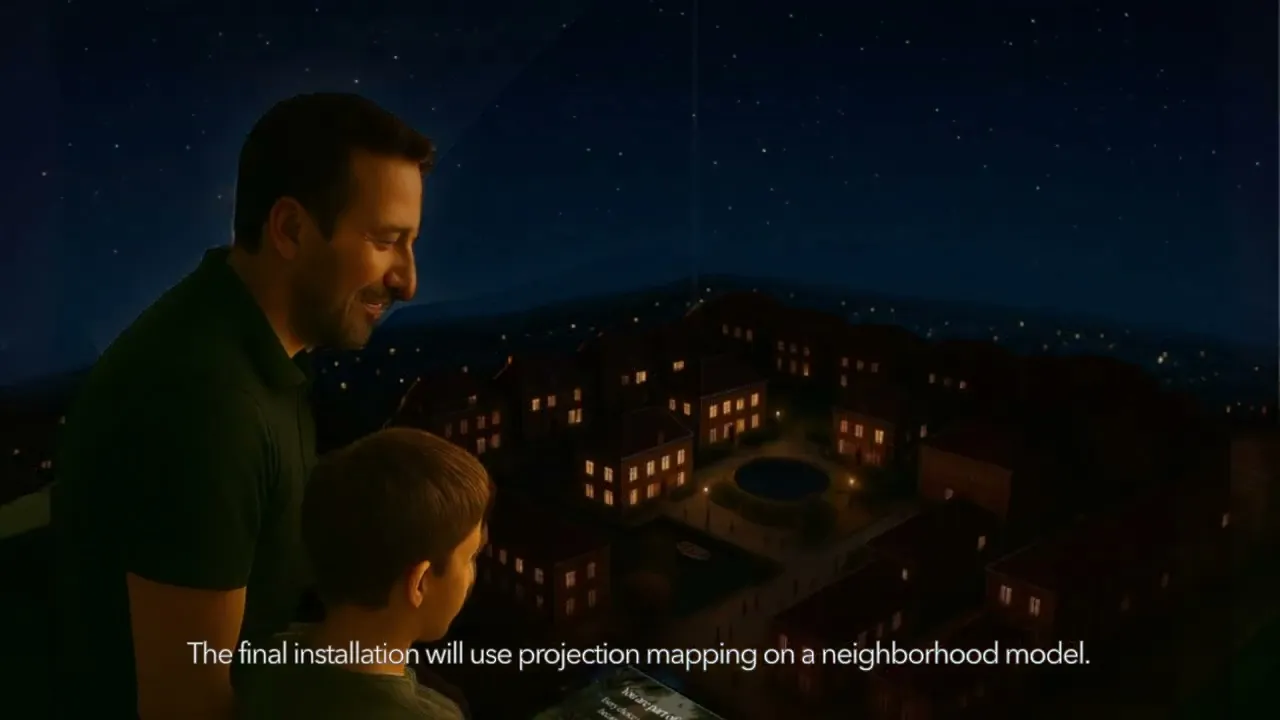
A family moves a small figure through a day in a Dutch neighborhood, built as a white tabletop model. At five points, they make one of those choices, like feeding the ducks or leaving a light on. Projection mapping then changes the model in real time: animals become healthy or sick, water turns clear or green, so the result of each choice is visible right away. Directional speakers keep the sound close to the model, and families gather around it, which draws other visitors in as well.
Three decisions shaped the design:
A story, not a quiz. Players make choices for a fictional family, not for themselves. That small distance makes it easier to be honest, and every option has a believable reason behind it, so there is no obvious "right" answer.
A tabletop, not a touchscreen. Reaching in, moving the figure, and watching the model change together is the whole point. The screen is just one small part.
Choices that add up. The effects do not reset between spots. They build up, so each family ends with a different neighborhood based on their own choices. That final result is what makes "everything is connected" easy to see.
I also placed the installation within the visitor journey. It sits at the end of the "Leven" gallery, right after families have enjoyed the nature on display, and a QR code at the end sends a few simple tips home.
I held the experience to a few rules: it had to be relatable, as the children had shown me, and it had to spark curiosity, invite reflection, and drive action. My first concepts were broad and unfocused, four directions pulling different ways. I refined them through rounds of feedback and testing: a midterm review, sessions with design peers, and input from Naturalis staff, with AI as a sounding board. The turning point came with the message. Once it sharpened to 'every choice affects nature, because everything is connected,' the design clicked into place, and the four narrowed to one.
The final concept made that message tangible through five everyday family choices: food waste, buying too many clothes and toys, littering, feeding ducks, and leaving lights on at night. Each is small, familiar, and tied to animals children already care about.
This was the des
ign decision I am most proud of. The message is about connection, so the experience had to connect people too. I built it as a physical model the family gathers around, not a screen each person taps alone, and I let them make the choices instead of telling them what to do.
A family moves a small figure through a day in a Dutch neighborhood, built as a white tabletop model. At five points, they make one of those choices, like feeding the ducks or leaving a light on. Projection mapping then changes the model in real time: animals become healthy or sick, water turns clear or green, so the result of each choice is visible right away. Directional speakers keep the sound close to the model, and families gather around it, which draws other visitors in as well.
Three decisions shaped the design:
A story, not a quiz. Players make choices for a fictional family, not for themselves. That small distance makes it easier to be honest, and every option has a believable reason behind it, so there is no obvious "right" answer.
A tabletop, not a touchscreen. Reaching in, moving the figure, and watching the model change together is the whole point. The screen is just one small part.
Choices that add up. The effects do not reset between spots. They build up, so each family ends with a different neighborhood based on their own choices. That final result is what makes "everything is connected" easy to see.
I also placed the installation within the visitor journey. It sits at the end of the "Leven" gallery, right after families have enjoyed the nature on display, and a QR code at the end sends a few simple tips home.
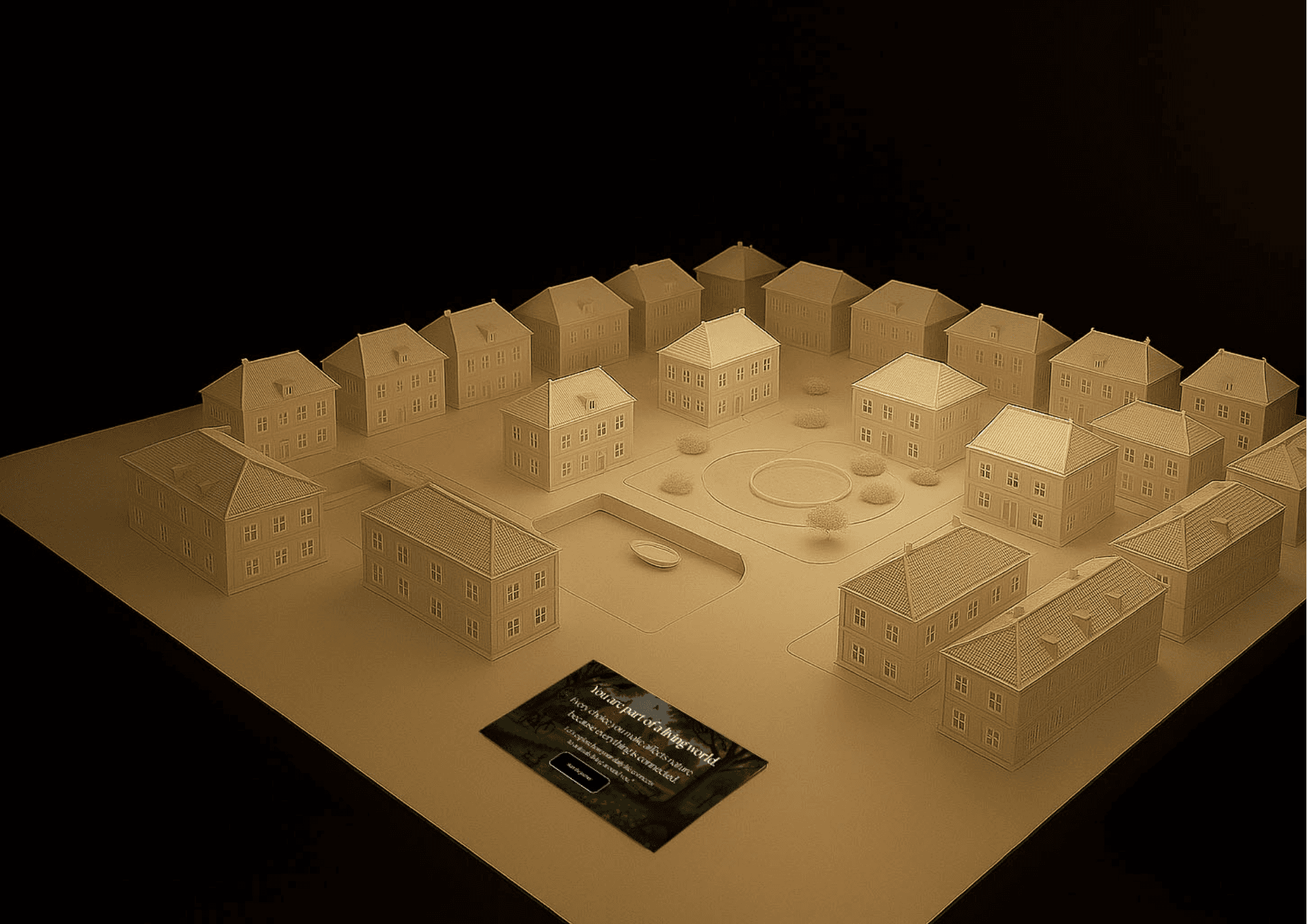
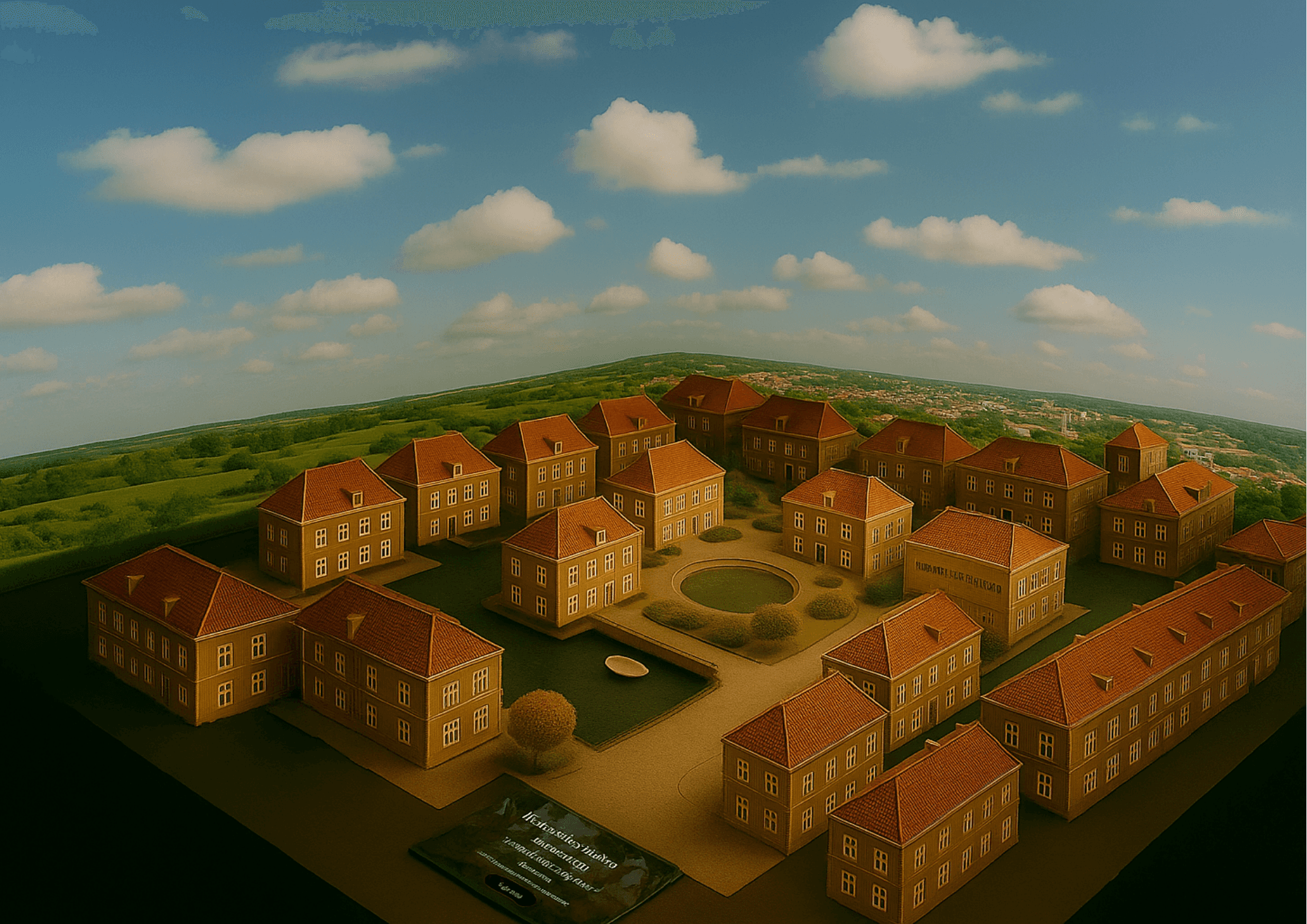
The canvas and the consequence: A physical model brought to life by projection. (AI visualization)
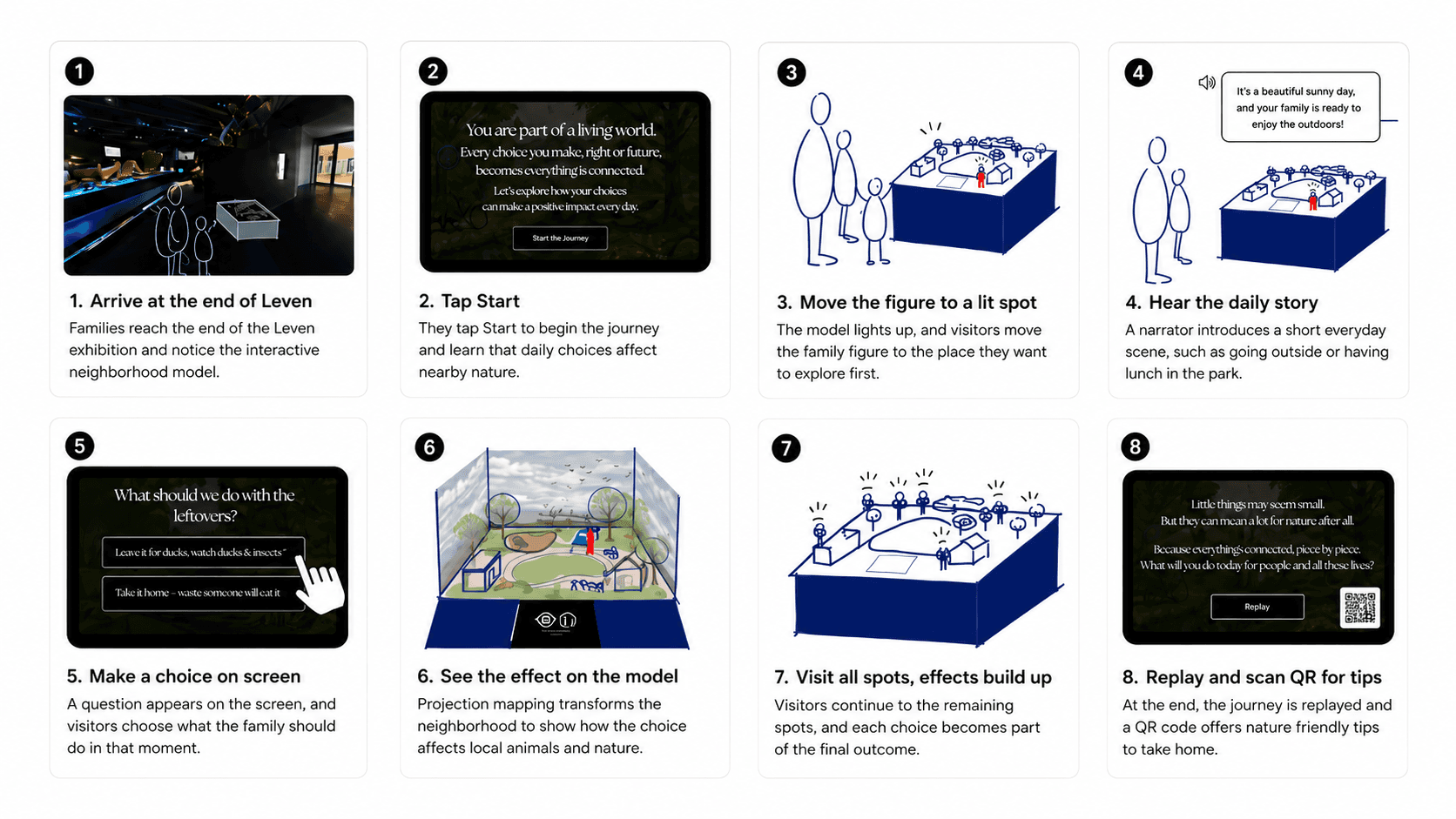
User flow: A step by step look at how families interact with the installation.
What seven families taught me
The full installation was still a concept, so I built a medium-fidelity prototype and ran it Wizard-of-Oz style, which let me test the whole experience with real families before any of the technology existed. Seven families took part at Naturalis. I watched them play, then talked with the children and the parents.
The core idea worked. Everyone understood it right away, and children kept connecting the choices to their own lives. Almost none knew that feeding bread to ducks harms the environment, and the link between lights and wildlife surprised most of them. "Now I'm wondering what street lighting does, too," one parent said. Families discussed the choices, recognized their own habits, and one child decided on the spot to tell his grandmother to stop feeding the ducks.
But the testing taught me more than the success did. I will show the scars, because each one was a lesson.
Children treated it like a test with right and wrong answers. Some hesitated before a "bad" choice, and one cheered when he picked the "right" one. That worked against the open reflection I wanted. The main lesson: if you want honest reflection, design choices with no obvious winner.
Families who already care about the environment found it too easy. They spotted the good option quickly, so the choices need more genuine trade-offs, not clear good-versus-bad pairs.
The best moment was the one I could not show. The build-up effect, the real payoff, could only be described in the prototype, not seen. Families were clearly excited for it, but I have not tested it yet.
I am honest about the limits. The group was small and fairly similar, the setting was controlled rather than a normal visit, and the time was too short to measure real change in behavior. But the clearest signal came from the people who matter most: the families themselves.
Where it went. The project ended as a research-backed concept and a tested, working prototype. The installation was not added to the museum's exhibition plans, but testing with seven families showed the core idea works: framing biodiversity as small, everyday choices makes an abstract topic feel personal and relatable for children.
The full installation was still a concept, so I built a medium-fidelity prototype and ran it Wizard-of-Oz style, which let me test the whole experience with real families before any of the technology existed. Seven families took part at Naturalis. I watched them play, then talked with the children and the parents.
The core idea worked. Everyone understood it right away, and children kept connecting the choices to their own lives. Almost none knew that feeding bread to ducks harms the environment, and the link between lights and wildlife surprised most of them. "Now I'm wondering what street lighting does, too," one parent said. Families discussed the choices, recognized their own habits, and one child decided on the spot to tell his grandmother to stop feeding the ducks.
But the testing taught me more than the success did. I will show the scars, because each one was a lesson.
Children treated it like a test with right and wrong answers. Some hesitated before a "bad" choice, and one cheered when he picked the "right" one. That worked against the open reflection I wanted. The main lesson: if you want honest reflection, design choices with no obvious winner.
Families who already care about the environment found it too easy. They spotted the good option quickly, so the choices need more genuine trade-offs, not clear good-versus-bad pairs.
The best moment was the one I could not show. The build-up effect, the real payoff, could only be described in the prototype, not seen. Families were clearly excited for it, but I have not tested it yet.
I am honest about the limits. The group was small and fairly similar, the setting was controlled rather than a normal visit, and the time was too short to measure real change in behavior. But the clearest signal came from the people who matter most: the families themselves.
Where it went. The project ended as a research-backed concept and a tested, working prototype. The installation was not added to the museum's exhibition plans, but testing with seven families showed the core idea works: framing biodiversity as small, everyday choices makes an abstract topic feel personal and relatable for children.
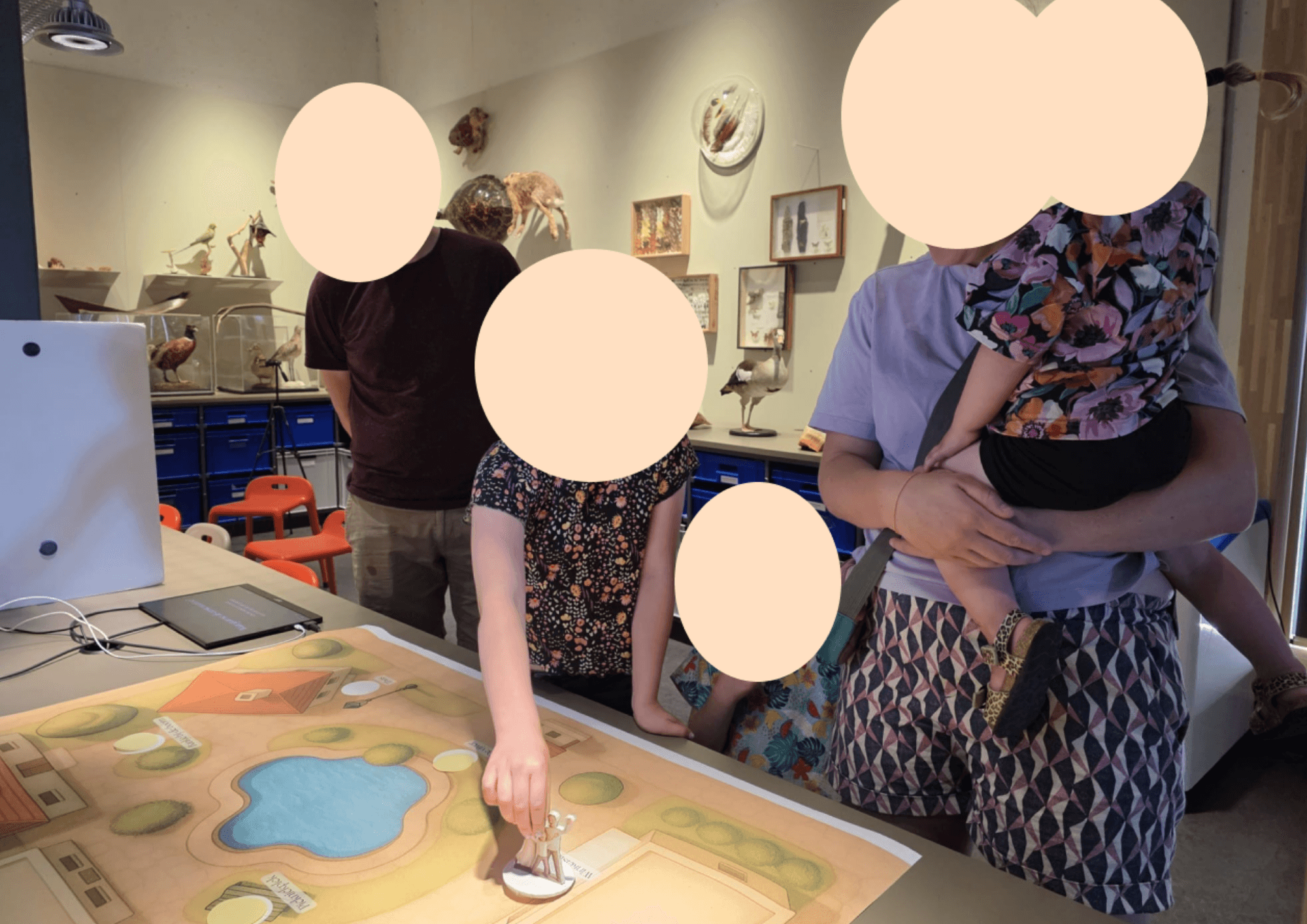
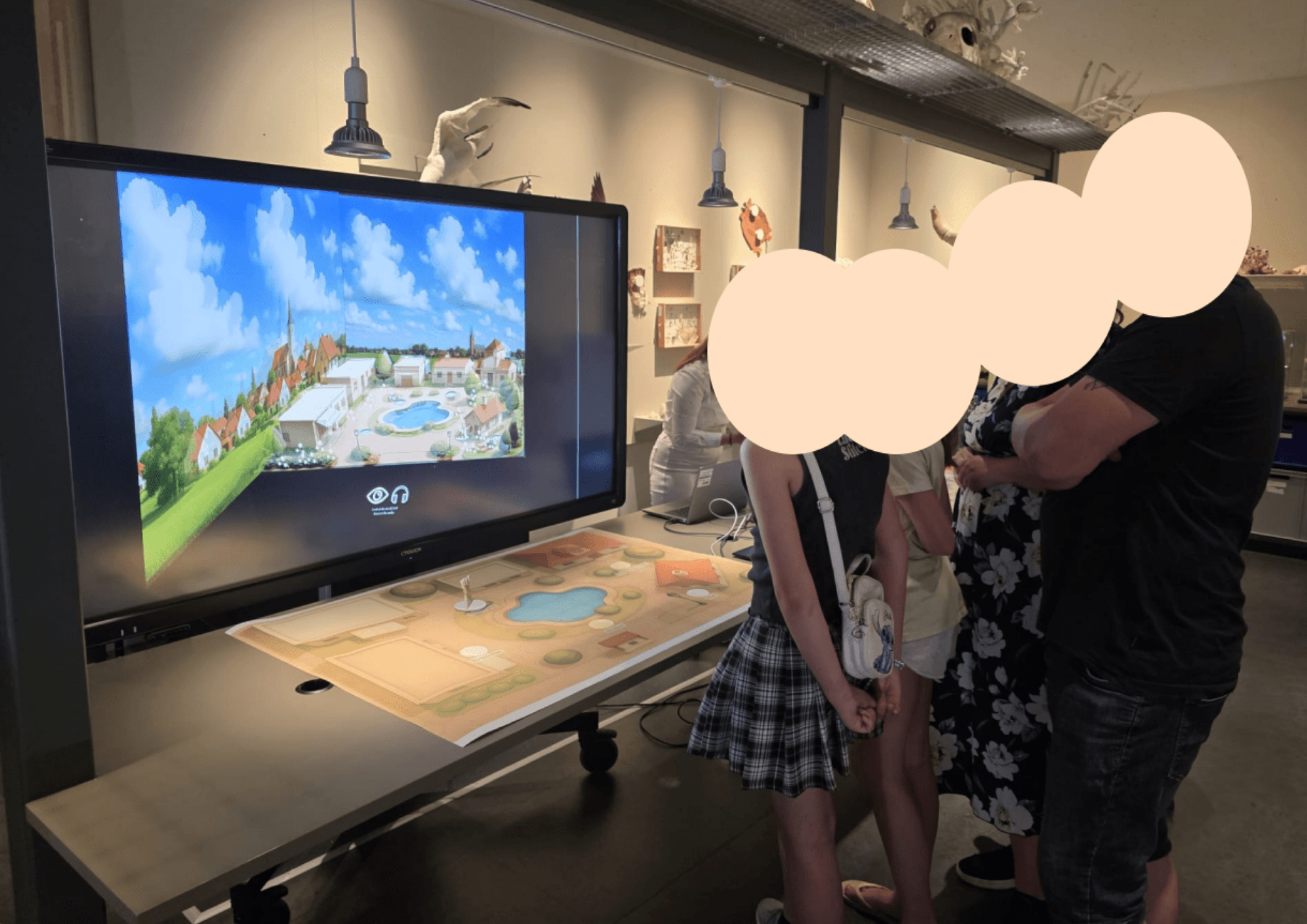
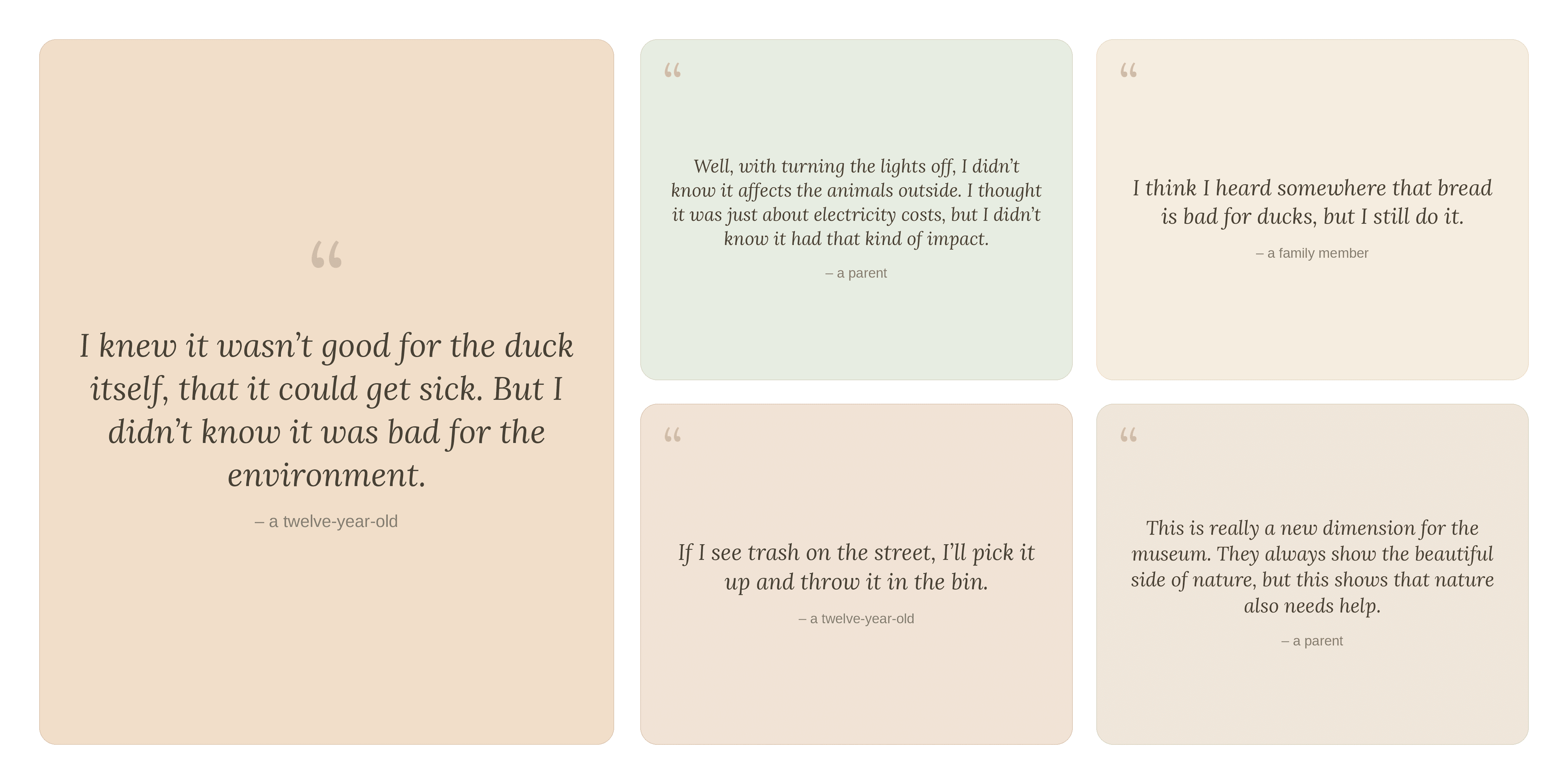
Family playing with the mock up model during the testing session at Naturalis and some quotes from the test session.
AI as a sparring partner, not a brain
I used AI across the whole project, from research to the final visuals. I relied on it heavily, but always as a tool I directed and a sparring partner to test my own thinking, from shaping the concept to writing the final test questions.
Logic stress-testing. Biodiversity is abstract, so I asked AI to map out the cause and effect behind each choice. Most of the chains were too far removed for a child, so I pushed back ("a child won't feel that") until they became things a child can picture: feed the ducks, and the water turns green, the duck gets sick, and rats move in. That back and forth shaped the feedback families see.
Questioning the questions. Later, AI suggested evaluation questions that sounded like a researcher wrote them, aimed at measuring "conservation action." For a nine-year-old, that is a leading question they cannot really answer, so I rewrote it: "Is there something small you think you could do after this game, to help animals or nature?"
Efficiency and visuals. AI also handled the slow, manual work. TurboScribe transcribed the interviews and ChatGPT translated the Dutch transcripts, while a native speaker checked the nuance, which freed my time for the analysis that needed a person. Since the full installation was still an idea, I used AI to create the visuals, from early concept mockups to the final renders (Fig. 77, 87), so Naturalis could respond in days rather than weeks. I selected the best results, refined them in Photoshop, discarded the ones with obvious errors, and labeled every AI image clearly. When families noticed the AI voiceover, I was clear that it was a placeholder, to be replaced by professional audio later.
AI gave me more options and saved me time. The empathy, the insight, and the decisions were mine.
Projection mapping. An example of how the environment changes during the experience.
I used AI across the whole project, from research to the final visuals. I relied on it heavily, but always as a tool I directed and a sparring partner to test my own thinking, from shaping the concept to writing the final test questions.
Logic stress-testing. Biodiversity is abstract, so I asked AI to map out the cause and effect behind each choice. Most of the chains were too far removed for a child, so I pushed back ("a child won't feel that") until they became things a child can picture: feed the ducks, and the water turns green, the duck gets sick, and rats move in. That back and forth shaped the feedback families see.
Questioning the questions. Later, AI suggested evaluation questions that sounded like a researcher wrote them, aimed at measuring "conservation action." For a nine-year-old, that is a leading question they cannot really answer, so I rewrote it: "Is there something small you think you could do after this game, to help animals or nature?"
Efficiency and visuals. AI also handled the slow, manual work. TurboScribe transcribed the interviews and ChatGPT translated the Dutch transcripts, while a native speaker checked the nuance, which freed my time for the analysis that needed a person. Since the full installation was still an idea, I used AI to create the visuals, from early concept mockups to the final renders (Fig. 77, 87), so Naturalis could respond in days rather than weeks. I selected the best results, refined them in Photoshop, discarded the ones with obvious errors, and labeled every AI image clearly. When families noticed the AI voiceover, I was clear that it was a placeholder, to be replaced by professional audio later.
AI gave me more options and saved me time. The empathy, the insight, and the decisions were mine.
Projection mapping. An example of how the environment changes during the experience.
The whole, not the parts
In the end, this project was about connection, in its message and in how it was made. A story, a space, screens, sound, and a parent-child conversation all had to work as one journey toward a single goal. Owning an experience end to end, and making every touchpoint pull the same way, is the thinking I bring to creating seamless user experiences.
Credits
MSc Design for Interaction, TU Delft, in collaboration with Naturalis Biodiversity Center. Supervisors: Mathieu Gielen (Chair), Arnold Vermeeren (Mentor), Pieter Aartsen (Naturalis). Research contribution: Museum Futures Lab and Play Well Lab, TU Delft. With facilitation, recruitment, and Dutch translation support during user testing.